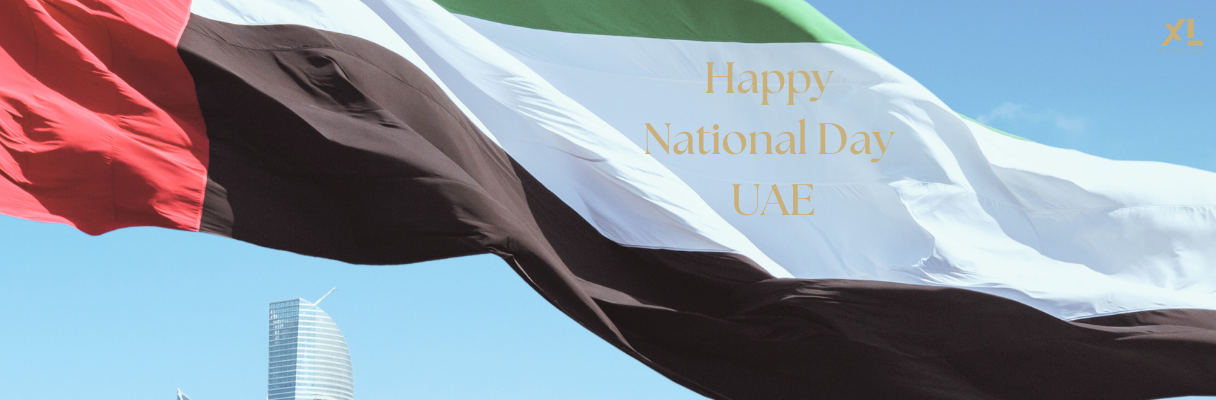
On the UAE’s 54th National Day, we explore how the theme ‘United’ and a focus on community transformed seven emirates into a global nexus of culture and commerce.
On 2 December 1971, a quiet but profound shift occurred on the Arabian Peninsula. Seven emirates—Abu Dhabi, Dubai, Sharjah, Ajman, Umm Al Quwain, Fujairah, and Ras Al Khaimah—chose collaboration over autonomy. They formed the United Arab Emirates.
Fifty-four years later, as we celebrate Eid Al Etihad under the banner of “United,” the result of that choice is visible not just in the skyline, but in the social fabric of the nation. What began as a political agreement has evolved into a global phenomenon.
From Desert to Global Destination
In 1971, the newly formed UAE had a population of roughly 180,000, relying largely on a fading pearl industry and nascent oil discoveries. Today, the population exceeds 10 million, a figure that represents one of the most rapid demographic evolutions in modern history.
This growth is not merely domestic; it is a masterclass in attracting the world. The “United” theme for 2025—set against the backdrop of the “Year of the Community”—is numerically quantifiable. The UAE is a mosaic of nations. According to recent demographic data, Emiratis comprise approximately 11.5% of the population. The expatriate community is a vast, interconnected web: Indian nationals make up roughly 27%, followed by Pakistani nationals at 12%, and significant communities from the Philippines (5%), Egypt, and the UK.
These are not transient workers passing through a turnstile; they are residents building legacies.
The tourism figures articulate a similar narrative of magnetism. Dubai welcomed a record-breaking 17.15 million international visitors in 2023, and 2025 is on track to surpass these figures. Abu Dhabi has firmly established itself as a cultural capital with the Louvre and the Guggenheim, while the northern emirates have carved distinct identities—Ras Al Khaimah for mountain adventure, Sharjah for heritage.
Infrastructure as Intent
The physical transformation of the UAE is often measured in concrete and glass, but its true value lies in connectivity.
Dubai International Airport (DXB) retains its title as the world’s busiest hub for international passengers, handling nearly 87 million travellers annually. Meanwhile, Abu Dhabi’s Zayed International Airport represents a new era of capacity and passenger experience. These hubs are statements of intent: the UAE was designed to be the world’s meeting point.
The logistics networks and telecommunications infrastructure are built to a standard that renders business seamless. In many nations, establishing a commercial footprint involves navigating a labyrinth of red tape. Here, the pathway is designed for speed. In the UAE’s specialised free zones, company formation is streamlined, digital, and efficient. The system functions because it was engineered to support ambition, ensuring that administrative processes accelerate progress rather than impede it.
Technology Without the Theatre
For years, the region spoke of diversifying away from oil. In the UAE, that conversation has shifted from aspiration to implementation.
The nation has positioned itself as a genuine technology incubator. Dubai’s smart city initiatives have moved beyond pilot programmes into the fabric of daily life. Government services operate digitally with a fluidity that often surprises visitors from the West.
Abu Dhabi has become a magnet for heavy technology and AI, hosting regional headquarters for global giants. The legislative framework here is proactive; the UAE was the first nation to appoint a Minister of State for Artificial Intelligence, and the results are tangible in the growing ecosystem of tech startups.
Furthermore, the space sector—highlighted by the Hope Probe’s mission to Mars—demonstrates what happens when leadership allocates resources to scientific advancement. It sends a signal to the world that this region is a producer of knowledge, not merely a consumer of it.
Business Without Barriers
Ask the global entrepreneurs who have migrated here why they chose the Emirates, and the answers rarely vary: clarity, safety, and the removal of friction.
The tax environment remains globally competitive. The legal frameworks are increasingly aligned with international standards, offering security to foreign investors. The geographic advantage—bridging the time zones of East and West—remains undefeated.
But more fundamentally, the UAE has created a meritocratic environment. It is a place where regulations are applied with consistency. The “United” theme extends to the economy; it implies a partnership between the public sector’s vision and the private sector’s drive. This synergy has reduced the friction of doing business to levels that make the nation fiercely competitive on the global stage.
The “United” Community
Perhaps the UAE’s most sophisticated achievement is the least visible: social cohesion.
In a world often fractured by difference, the UAE stands as a functional model of coexistence. The 2025 theme, “United”, celebrates this reality. It is rare to find a society where over 200 nationalities live in such close proximity with such high levels of safety and mutual respect.
This harmony is not accidental. It is the result of clear governance, strict tolerance laws, and a cultural ethos of hospitality that predates the skyscrapers. When you walk through the DIFC or the cultural district of Saadiyat, you see the “Year of the Community” in action: British architects collaborating with Emirati engineers, Lebanese designers working with Chinese investors. It is a global economy operating in a single postcode.
What Fifty-Four Years Actually Means
National Day celebrations are often marked by the spectacular—the fireworks, the air shows, the flags adorning every street corner. These displays are warranted.
However, the true essence of Eid Al Etihad is found in the quiet efficiency of daily life: the business that launches successfully, the safe streets, the world-class healthcare, and the society that welcomes diversity without losing its identity.
Fifty-four years ago, seven rulers made a choice to unite. That choice proved that leadership is about more than governing; it is about building. It demonstrated that a nation can honour its heritage—the pearl divers, the poets, the Bedouin resilience—while fearlessly embracing the future.
For those of us at Xplora Luxe, and for the millions who call this nation home, National Day is a reminder that we are part of a remarkable continuing story. We are part of a nation that decided, in 1971, that we are better together.
Happy National Day, UAE.
Author Bio:
Xplora Luxe is a premier luxury concierge, lifestyle management and global travel design firm based in Dubai, dedicated to curating exceptional experiences for high-net-worth individuals and corporate executives across the UAE and globally.
Related Reading:
- The Year of the Community: How Diversity Drives the UAE Economy
- Beyond the Skyline: Cultural Tourism in Abu Dhabi and Sharjah
The GCC’s Economic Evolution: A 2025 Perspective